“The Person Doing the Work is Doing the Learning”

What will be the role of students in the classroom? What are ways to enhance student opportunities in these roles?

Leaders: Giving students the opportunity and teaching them how to act as leaders in the classroom and at school is an important role. Teaching students to take accountability for themselves, their space and their learning. In the classroom there are various ways that students can act as leaders. For example; students can be assigned or apply for leadership positions or jobs within the classroom. This can range from librarian, clean up crew, messenger etc… this teaches students responsibility and lets them be an active member of their classroom. It promotes communication, collaboration and community. See the video below for a peak at how this teacher establishes and uses leadership roles.

Thinkers: According to critical thinking specialist, G. Randy Kasten believes that the ability to think critically will benefit students throughout their lives. It “is one skill separating innovators from followers.” The definition of critical thinking is not universally agreed upon, but Kasten says “it is merely the ability to understand why things are the way they are and to understand the potential consequences of actions” (2018). Being a critical thinker is another important role as students, as mentioned above, it is a skill that will be used life long. Teaching students how and why it is important can start in elementary school and continue throughout. Critical thinking is one of the 5 C’s of PBL, which a great way to give students the opportunity to practice these skills in a real world, hands on approach.

Collaborators: Lee Vygotsky Russian teacher, and psychologist is credited with first stating that we learn through interactions with our peers and teachers. Social learning theory explains how people can learn in different social contexts and how creating a more active learning community can positively impact a learner’s ability and help meet individual learner goals (Poth, 2018). Collaboration is another life long skill that students can learn early on and continue to do as become productive citizens. With the advances in technology, there are more ways to collaborate that can occur outside of the classroom and beyond the school day. “It can be of benefit to give students opportunities to collaborate within a virtual space, as that often can have a positive impact on their interactions in the physical learning space as well.  In preparing students for the future, where they will likely need to work with others as part of a team, they will need experience in developing the skills to collaborate, to problem-solve, to think critically, and to have discussions as part of the learning or decision-making process” (Poth, 2018). We have the opportunity to create these experiences for them, and as the teacher, we then move to more of a facilitator and work alongside students to help them with these collaborations as they work on learning the content material or focus on more PBL.

Resources:

The importance of critical thinking for students. (2018, August 14). Retrieved from https://getonline.uwf.edu/articles/education/critical-thinking-for-students.aspx

Poth, R. D. (2018, October 14). Collaboration: bringing students together to promote learning. Retrieved from https://www.gettingsmart.com/2018/10/collaboration-bringing-students-together-to-promote-learning-can-move/
Personalized Learning & Assessment

What is Personalized Learning?

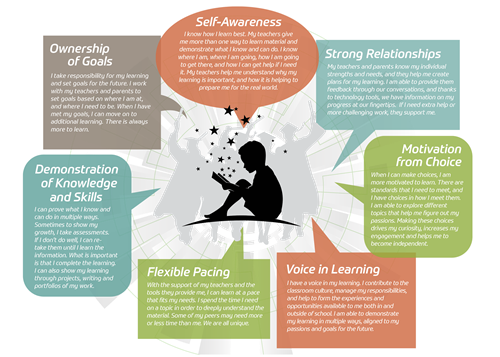
According to Personalized Learning: What You need to Know, Personalized learning is about kids learning in different ways and at different paces. Each student gets a “learning plan” based on how he learns, what he knows, and what his skills and interests are. The teacher doesn’t lead all students through the same lessons. Instead, the teacher guides each student on an individualized journey. The what, when, where and how of learning is tailored to meet each students strengths, needs and interests. (Morin, 2017)

Eden Prairie Schools Personalized Learning from Eden Prairie Schools ISD #272 on Vimeo.

How this model allocates for student assessment, review and mastery?

Using personalized learning allows for teachers to meet students exactly where they are. This includes aspects of assessment. Typically, teachers use formative assessments throughout units and a more summative assessment upon completion of a unit- while teaching the class at the same pace, and assessing students at the same time. Personalized learning allows for students to be assessed on standards, skills and strategies when they are ready. As we know, not all students learn the same way or at the same rate. Personalizing their learning to fit them allows for them to work at their own pace in their own way. If they need re-teaching they get it. If they are ready to move on, they do so. If they are read to be re-assessed then they are.

From my prior experience, working in a personalized learning and competency based school, the most important way to get this model started is to have buy in from all staff and faculty. They have to truly believe that this is how students will best learn and become the most successful. Then it translates to the classroom. Figuring out what it looks like in your room and for your teaching style and students. It is also important to have some components of personalized learning, which might include a data binder, learning plan/path, and data wall. The last important piece in my opinion, is to have your students understand they why. Figuring out how they learn best. This includes them learning and understanding that not everyone learns the same way or at the same time. They learn to lean on each other for support and find that they can use each other for a resource if they need help. When re-assessing, it is not embarrassing but rather an accomplishment that you are ready to try again and get ready to move on. Building a community that cheers each other on and celebrates when someone masters a new standard, but also is supportive and willing to help when someone might not get it yet.

Tips for getting starting with personalized learning

According to the article, Turn Your Classroom into a Personalized Learning Environment Robyn Howton shares five ways she help turned her “traditional sage-on-the-stage affair to a tech-assisted personalized learning haven.”

  1. Learn from others
  2. Use the technology you have
  3. Let students make choices
  4. Choose the best delivery content method
  5. Assess as you go
  6. Pull it all together

(Howton, 2017)

To read more about the tips visit the article at: https://www.iste.org/explore/Personalized-learning/Turn-your-classroom-into-a-personalized-learning-environment

Resources:

Howton, R. (2017, August 16). Turn your classroom into a personalized learning environment. Retrieved from https://www.iste.org/explore/Personalized-learning/Turn-your-classroom-into-a-personalized-learning-environment?articleid=416

Morin, A. (2017). Personalized learning: what you need to know. Retrieved from https://www.understood.org/en/school-learning/partnering-with-childs-school/instructional-strategies/personalized-learning-what-you-need-to-know

Is PBL the way to teach?

What’s the scoop with PBL?

Project Based Learning (PBL), which has similar characteristics of the Cooperative Model Approach (discussed last week) is defined as “an instructional methodology that encourages students to learn and apply knowledge and skills through an engaging experience. PBL presents opportunities for deeper learning in-context and for the development of important skills tied to college and career readiness” (O’Brien, 2019).

Characteristics of PBL

O’Brien (2019), discusses a few very important characteristics of Project Based Learning.

  1. Inter-disciplinary: PBL focuses on engaging students in real word problems. Whether it is a problem students have prior knowledge about or one that has peaked their interest, students are doing meaningful work to deepen their understanding. Just as problems in real life are not always solved using a single skill or set of information, PBL pushes students to draw from many disciplines as they work over the course of a project.
  2. Rigor: Students begin a project with an inquiry or driving question. Throughout the process students are using higher order and critical thinking skills. Students are using academic content as well as content and skills that are needed in the real world. Students learn to reason and problem solve as well as learn it is not always about the product, but more so the process.
  3. Student Centered: PBL turns the role of the teacher into the project facilitator and lets the kids take the lead. It is up to them what they plan to do and where their project goes. This can be a challenge (it was for me at first) to let go of the reigns and let the students “drive the bus.” Students are encouraged to make their own decisions and decide how they will show their understanding.
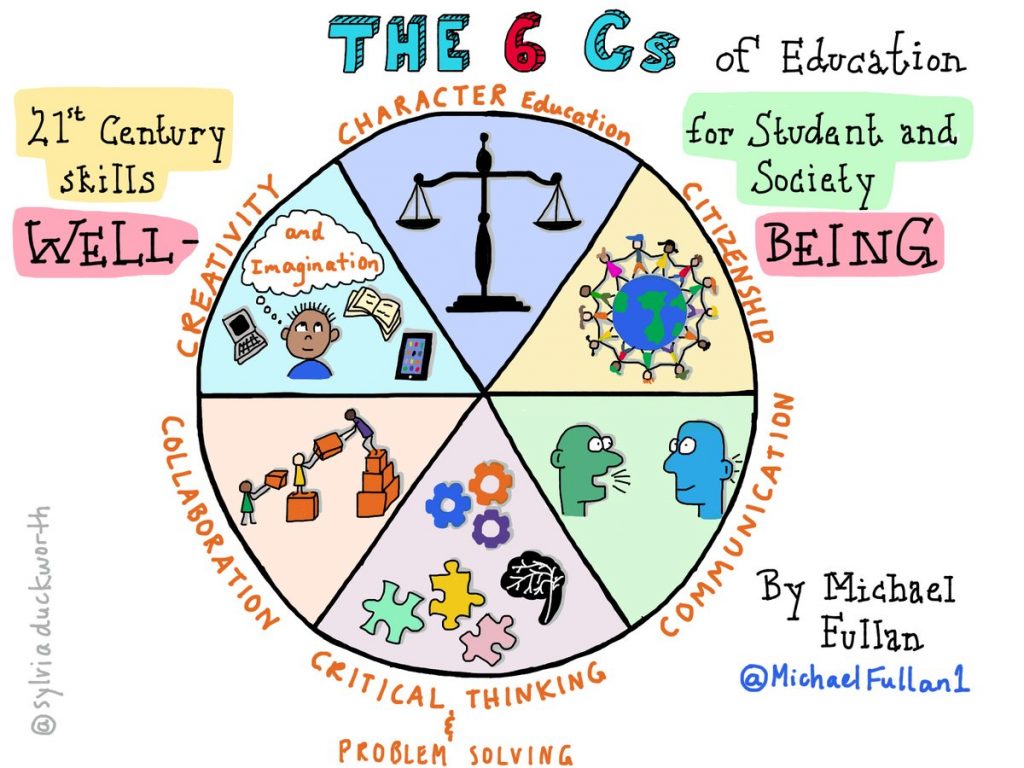
  4. 21st Century Skills: Through PBL students learn important skills that they will need as they continue their education as well as become productive citizens in the future. “Students learning in a PBL setting are often more engaged in the learning process and develop a deeper understanding of the content and skills required for college, work, and life beyond school. PBL helps build 21st-century skills students need to succeed and develops students’ capacity for critical thinking, communication, collaboration, and creativity” (O’Brien, 2016).

PBL in 1st Grade

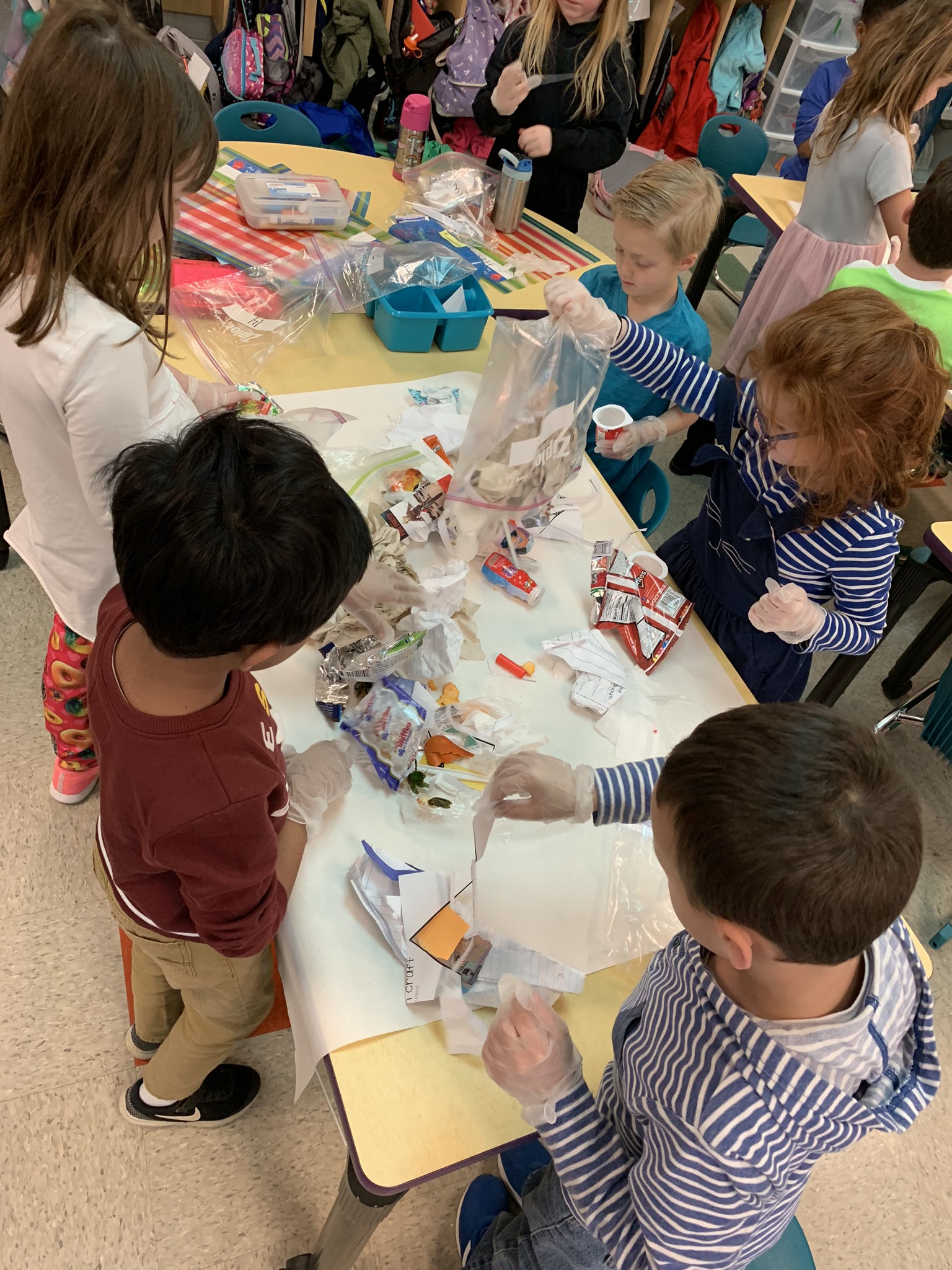
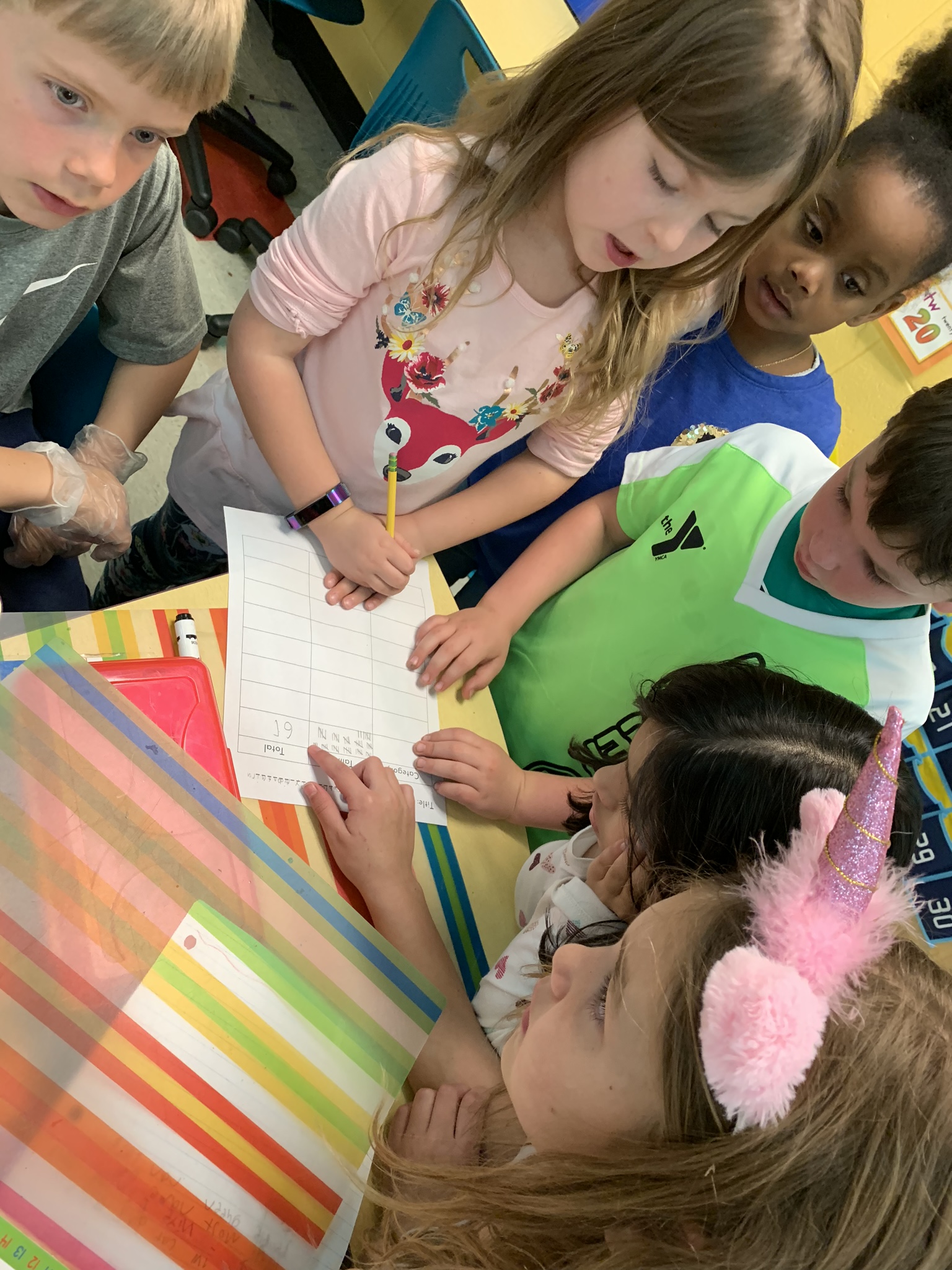
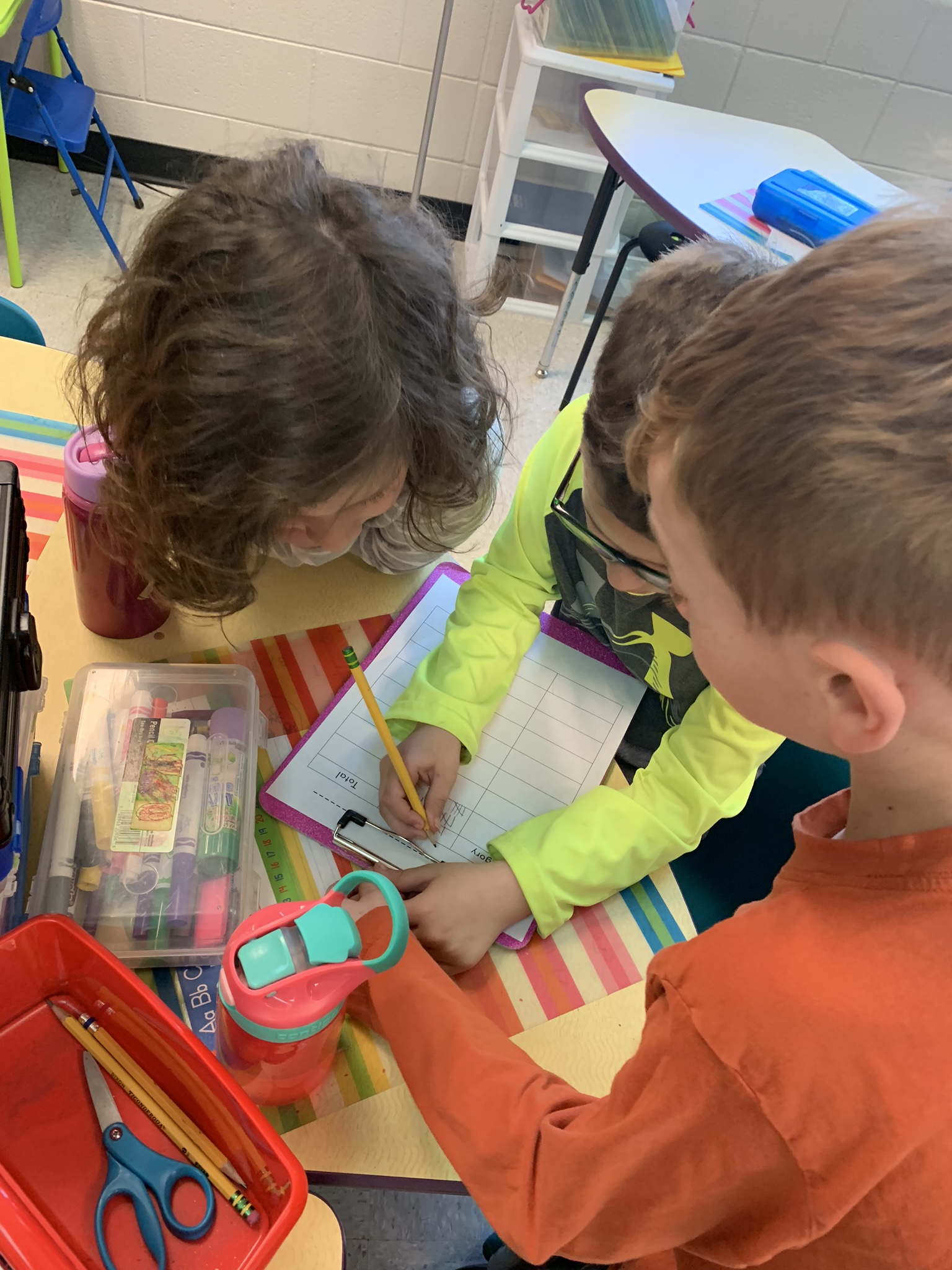
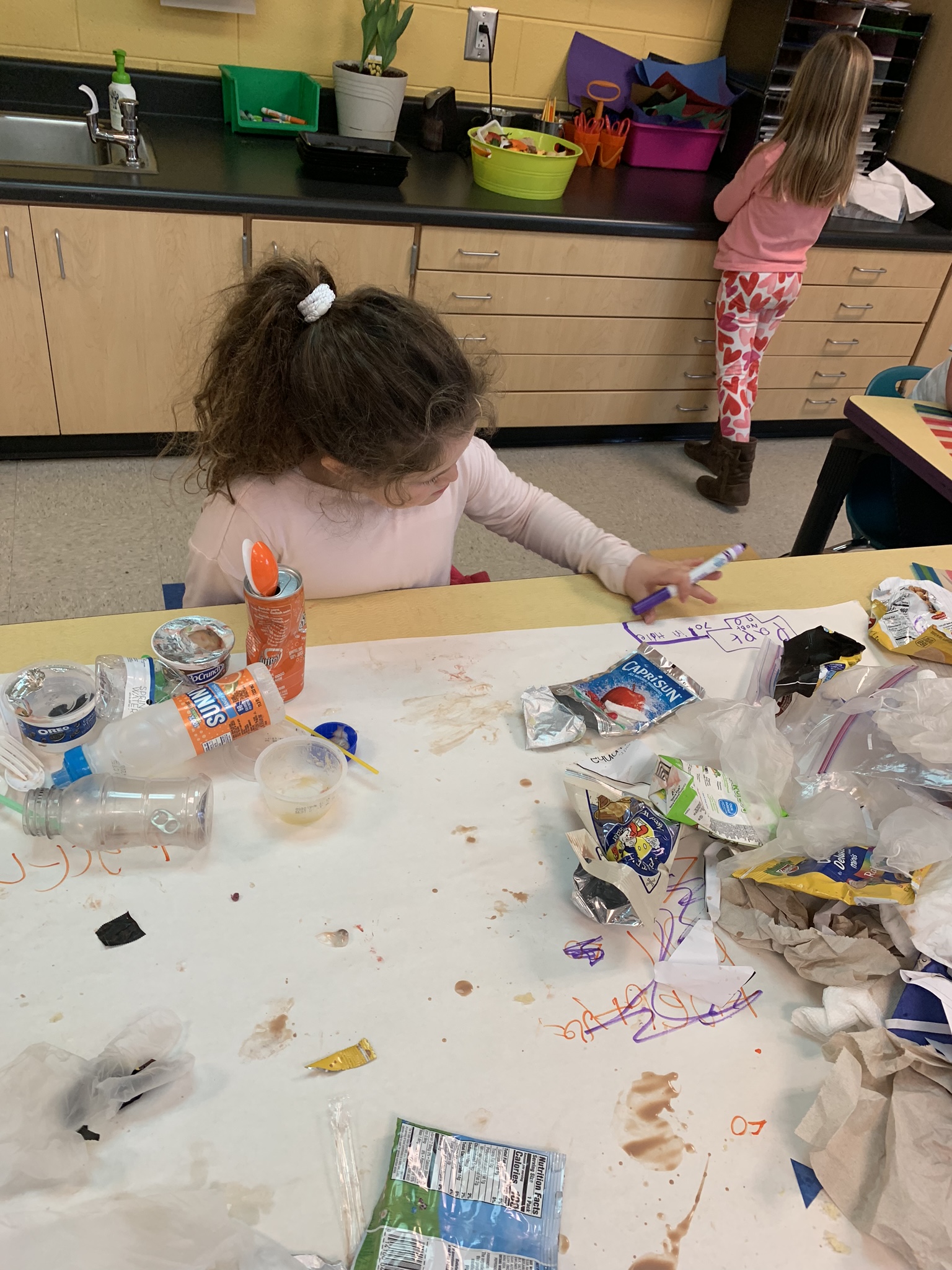
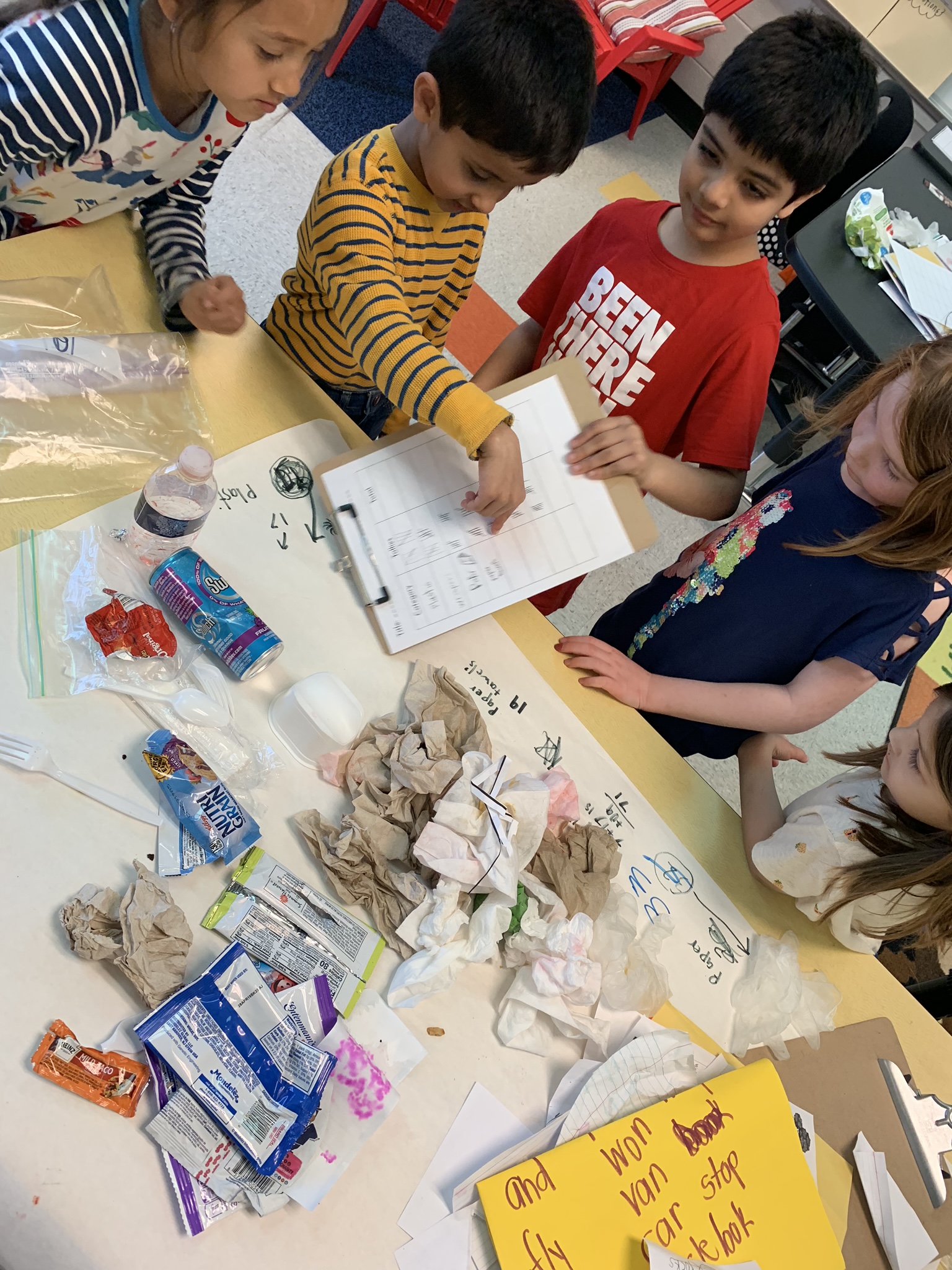
PBL looks different in each grade, each classroom and for each group of students working. Students will take different routes and come up with different products. Over the course of the year we have 4 main PBL projects in first grade. This year our big project focused on Natural Resources. To kick off the project and get students excited we planned for a day without trash cans. Students came in one morning and there were no trashcans in our rooms or on our hallway. We told students our custodian said that we were throwing away too many paper towels, scrap paper etc… and we needed to find a way to cut back. Immediately students started brainstorming what we could do with our trash for the day. Our class decided to collect all our trash in plastic bags to see how much each person was using. This went the whole day, we even collected food waste to see how much was being wasted at snack and lunch. At the end of the day we sorted (with gloves of course) all of our trash to see where most of the trash was coming from. Students worked together counting, sorting and organizing into various categories. We tallied the totals and graphed categories students had chosen. At the end of the day I explained to students what the purpose behind the day was and introduced our driving question which set us up for the remainder of the project. “How can we, as environmentalists, encourage others to conserve our natural resources?”

These pictures are from our kick off day!

Over the course of the next few week students worked on learning more about the driving question. We created lots of anchor charts, including what we needed to know and what we’d learned in order to accomplish the task. Students learned about different types of natural resources, where they came from and how they could be conserved. Students read, research, asked questions, and found many resources to help answer our question. Students learned about new technology platforms as it came closer to creating their final projects. Students worked in small groups choosing a platform in which they would choose an audience to bring awareness to about the use of natural resources and the best ways to conserve them. Students shared their final work with their chosen audiences. Throughout this process all the characteristics of PBL mentioned above were incorporated. Students had to think critically, collaborate, communicate, problem solve, and be creative. Check out some of the ways first graders chose to showcase their work!

Posters to promote Reduce, Reusing and Recycling to conserve Natural Resources

Resources

Edutopia. (2014). Five keys to rigorous project-based learning. Retrieved from youtube https://www.youtube.com/watch?v=hnzCGNnU_WM&w=560&h=315

O’Brien, M. (2019, March 12). What is project-based learning? Retrieved from https://www.definedstem.com/blog/what-is-project-based-learning/

Stop, Collaborate and Listen

Find out the who, what, where, when, why and how when using cooperative learning and the benefits of this instructional approach

Who: This instructional strategy is for any educator, classroom teacher, small group/RTI teacher or special area teacher to implement with their students.

What: According to the article written on Teacher Vision, “Cooperative Learning is an instructional approach in which small groups of students work together on a common task. The task can be as simple as solving a multi-step math problem together, or as complex as developing a design for a new kind of school. In some cases, each group member is individually accountable for part of the task; in other cases, group members work together without formal role assignments.”

Where: This strategy can be used in any grade level or content area

When: Anytime you see fit. During a project, when practicing or learning a new strategy or skill, or simply building relationships and rapport among students.

Why: Using the cooperative learning approach creates high engagement among students. It gives students the opportunity to work together to problem solve, think critically, collaborate, communicate and be creative. It give students ownership of their learning and holds them accountable. This approach teaches students both soft and hard skills they will need as they continue their education and become productive citizens.

How: According to David Johnson and Roger Johnson (1999), there are five basic elements that allow successful small-group learning: positive interdependence, promotive face to face interaction, individual accountability, social skills and group processing. A visual representation of this concept is below

(Jones & Jones, 2008)

The Cooperative Learning Model: The Template

  • Positive interdependence: to ensure that work is equally distributed among all participating students and that no one takes on a disproportionate share of the work.
  • Face-to-face interaction: in which students explain to one another how to solve problems, share information, and connect information to prior knowledge.
  • Individual accountability: meaning, that each student is responsible for his her own learning
  • Social Skills: Basic cooperative skills, functioning skills, formulating skills and fermenting skills.
  • Group processing: during a discussion about whether the activity met cooperative learning goals.

(Estes & Mintz, 2016, pg. 184)

Benefits of Cooperative Learning

"Cooperative learning encourages achievement, student discussion, active learning, student confidence, and motivation" 

(Johnson & Johnson, 1989)

Students learn to collaborate and work with others. They learn to take turns, communicate about problems and brainstorm ways to solve those problems. They learn to listen and appreciate other’s ideas, opinions and thoughts.

Students learn accountability. Although students are working with others they have to be accountable for their own participation and completion of their assigned task.

Students learn to self reflect and assess. Students learn to reflect on themselves as well as their group members. What went well, and what could be changed or adjusted in the future. Students can assess their own learning and understanding throughout.

Students take ownership of their learning. They invest in what they are learning and take initiative to get the tasks completed because the work is important and meaningful to them.

Cooperative learning approach encompassing all 5 elements as first graders kicked off our natural resources PBL project. More to come on PBL, next week!

Resources:

Cooperative Learning: Teaching Strategy (Grades K-12). (2007, February 08). Retrieved from https://www.teachervision.com/professional-development/cooperative-learning

Estes, T.& Mintz, S. (2016). Instruction: A Models Approach 7th Edition. Boston, MA: Person. 

Johnson, D., & Johnson, R. An Overview of Cooperative Learning. Retrieved from http://www.co-operation.org/what-is-cooperative-learning

STOP… It’s Center Time!

Thinking about utilizing learning centers in your classroom but don’t know where to begin? Here are some big ideas on how to get started.

What are centers? Learning centers can be used for independent practice in the direct instructional model.

What do students do in the centers? How many are there? Any content you would like students to practice; reading, writing, math, social studies, science, word work, handwriting. You can have as many centers as you like and can have centers for more than one subject area. If you are just beginning, I would suggest starting with 4-5 rotations so it is not overwhelming for you, or for your students. Students can work at each center for various amounts of time, as they build stamina they will be able to work longer than to begin with. It also depends on how much work there is to be done at each center and how many centers they are expected for rotate through at a given time. My students rotate through one literacy center each day, which lasts about 45 minutes long.

How do I introduce centers? Model, model, model. Practice, practice, practice. Each class is different. Start small and slow. Use the Gradual Release of Responsibility Model to help students gain understanding and independence. “This model promotes the teacher modeling an instructional strategy, the students engaging in practice and peer
collaboration, and then the students transiting to even greater independence” (McKnight, 2016, pg 2). The model follows as; I do, we do, you do. Using this model will set up the expectations for students during centers and eliminate confusion as students begin to learn the system. To find out more about the GRR model I recommend checking out Learning and Literacy Centers, Not Just for the Primary Grades.

How many students are at each center? How do you group them? Depending on how many centers you establish and how many total students you have in your class will determine the following. With 24 students and 6 literacy centers I have 4 students at each center. I think this is a perfect number and feel that anything larger than 4 can become too much. Students can be grouped however you prefer. Students could be grouped heterogeneous or homogeneous. My students are grouped heterogeneously, with behaviors, strengths and areas to grow taken into consideration. Groups could also be fluid depending on what is trying to be accomplished.

What do you do while students work in centers? While students are working independently in their centers the teacher can be doing a variety of things. Pulling small groups to work on specific skills or strategies, working one on one with a student or assessing students. Again, these groups can also be fluid, homogeneous or heterogeneous depending on the goals that are trying to be reached. The amount of students/ groups met with daily depends on the skills that are being worked on and how much time is allotted.

What are the benefits to using learning centers in the classroom? There are many benefits to using centers within the classroom. Students learn how to work independently, practicing previously taught curriculum or skills, students learn to work together, communicate and ask questions among their group mates, students learn to problem solve as well as follow directions, students get to know different students within the class and work along side them. This also gives the teacher the chance to meet and work with students while meeting them where they are. According to the Small Group Instruction: How to Make it Effective, there are four key benefits to small group instruction that include; the ability to personalize instruction, provide immediate feedback, reteach or pre-teach and build confidence. While students are working in their center it gives the teacher the opportunity to see these benefits and help students accomplish their goals.

Interested in how and why centers can be used to differentiate for learners? Check out these rotations are used in a classroom and how they can be used to differentiate for students.

This image has an empty alt attribute; its file name is img_5966.jpg
Students working on independent reading in their literacy center
Students working in their math center to review graphing
Working one-on-one with a student to increase accuracy and fluency

Resources:

Edutopia. (2017). Station Rotation: Differentiating Instruction to Reach All Students.

McKnight, K. (2016). Learning and Literacy Centers, Not Just for Primary Grades.

Van Zant, S., & Volpe, N. (2018, September 27). Small Group Instruction: How to Make it Effective.

Welcome!

Thanks for joining me!

My name is Parker Henry I and am a first grade teacher in South Carolina. Both anxious and excited for summer as it is quickly approaching. The end of the year is always bittersweet! I am pursuing my degree in Curriculum, Instruction and Innovation with an emphasis in Instructional Coaching. When I’m not at school or working on class work I love to spend time outside; riding bikes, hiking or lounging by the pool. I love to read a good book, travel and spend time with my friends and family.

I have created this blog to share my insights and opinions on all things teaching, learning, and instruction.

Teachers have three loves; love of learning, love of learners, and the love of bringing the first two loves together.

Scott Hayden

Enjoy!